We’re proud to present You the excerpt of our paper following up the concept LoRA “Anamorph1x”, a LoRA based on Z-IMAGE model simulating the anamorphic cinematic style.
Here the excerpt:
“Contemporary generative image systems increasingly equate visual quality with total visibility: ultra-high resolution, uniform sharpness, noise suppression, and spatial coherence. In parallel, streaming distribution has normalized a video-oriented aesthetic optimized for domestic displays, contributing to the erosion of filmic texture, ambiguity, and perceptual depth.
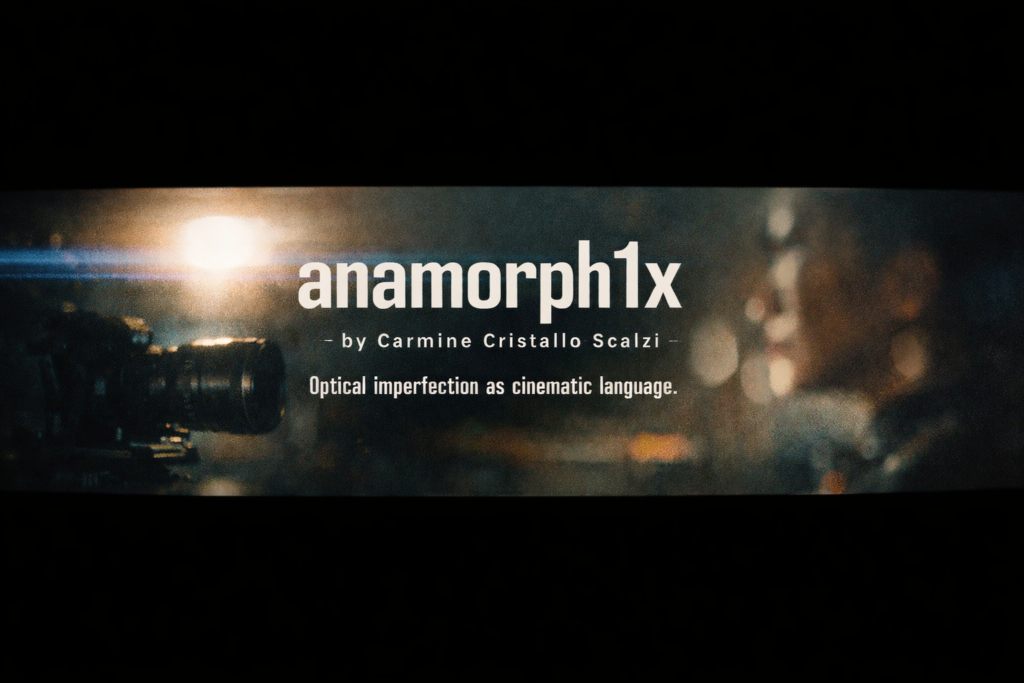
This paper argues that anamorphic cinema offers a paradigmatic counter-model to this tendency, not as a stylistic preference but as an epistemological case in which optical imperfection functions as intentional cinematic language. Characteristics such as oval bokeh, edge distortion, spatial compression, and non-uniform sharpness are examined as structural devices through which cinema organizes space, attention, and meaning.

Starting from anamorphic cinema as a primary case study, the paper extends the discussion to other coherent formal strategies—including constrained aspect ratios (e.g. 4:3), luminance-driven black-and-white regimes, shallow depth of field, and film-oriented color science—situating them within a unified ethical framework of cinematic form. In the context of generative cinema, the paper critiques the normalization bias of diffusion-based models and proposes an author-driven, ethically constrained generative pipeline, arguing that while powerful stories determine the images they require, it is the rigor of the chosen image-form that allows cinematic works to endure.”
Stay tuned for the 2026 paper , LoRA and ComfyUI workflows.
CCS